


By Anke Zimmer - Originally published on 07.02.2026 in the Fuldaer Zeitung
Photos: Sophia Walkenhorst
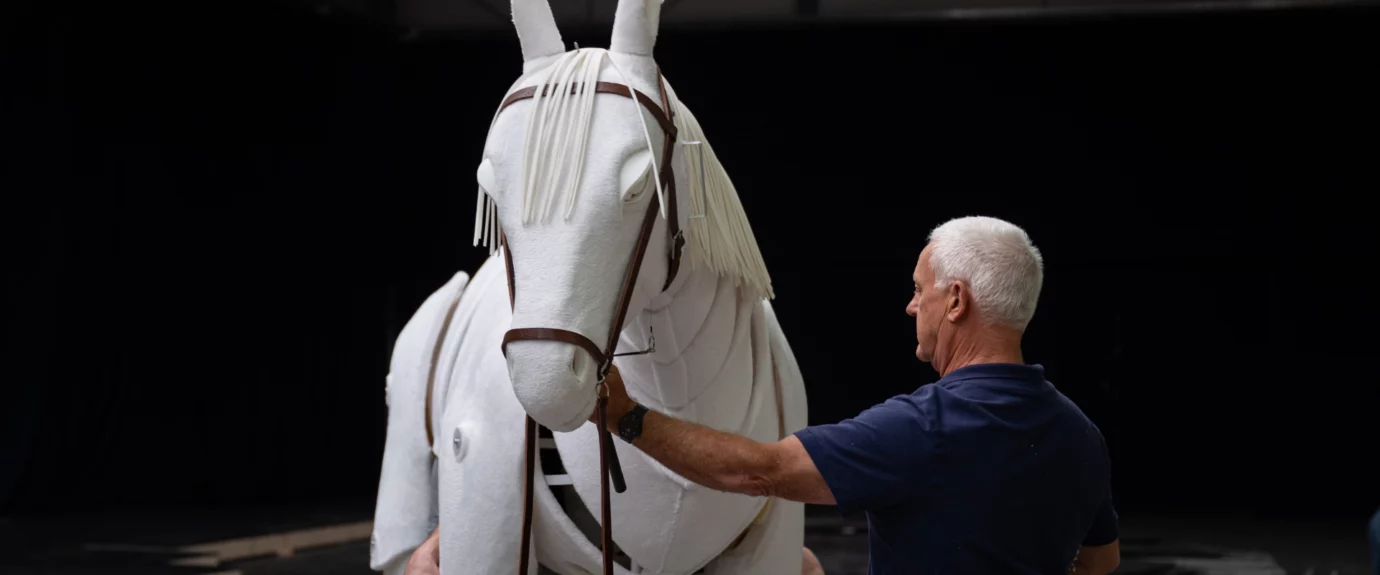
Roger Titley from Wilderness in South Africa has been involved in puppetry for events, films and various live performances since the early 1980s. Among other things, he created the opening and closing of the FIFA World Cup in South Africa in 2010 and the opening of the Olympic Games in Rio in 2016. He answered a few questions for our newspaper on the sidelines of training with the white horses for the new spotlight musical.
You create puppets for many events worldwide. What is so appealing about them? What fascinates you about such puppets?
Well, I've been making dolls since the 1980s, so since the early 80s. I just love the process of designing them and bringing them to life. It's fantastic. The great thing about them, the reason I love puppetry so much, is that it combines all the arts. Sculpture, painting, craftsmanship. And of course the performance when it's all finished! That's the real joy.
Which animal is the most complicated puppet?
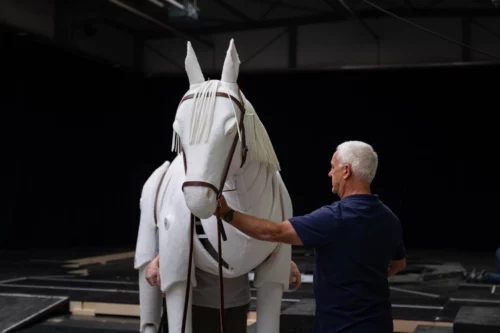
Probably the horse. Because we really try to give it character.
I imagine it will be difficult to find a construction that leads to smooth movements.
You know, I have to bring a lot of my dolls to events, and then they have to be able to be operated within a few days. So I have to keep them as simple as possible. What the horse is about is linking the feet of the people and the feet of the animals. That way they are completely connected.
Your homepage shows that many animals are operated from the outside, for example with poles and pulling devices. This is different with the Schimmel.
It's really difficult because the players are inside the horse. Whoever is operating it can't see anything. So they are completely dependent on the puppeteers from outside to get instructions. What's more, the movements often don't make sense to the player; it doesn't feel like the horse is walking naturally in the puppet's body.
How do you then explain to the players what they have to do?
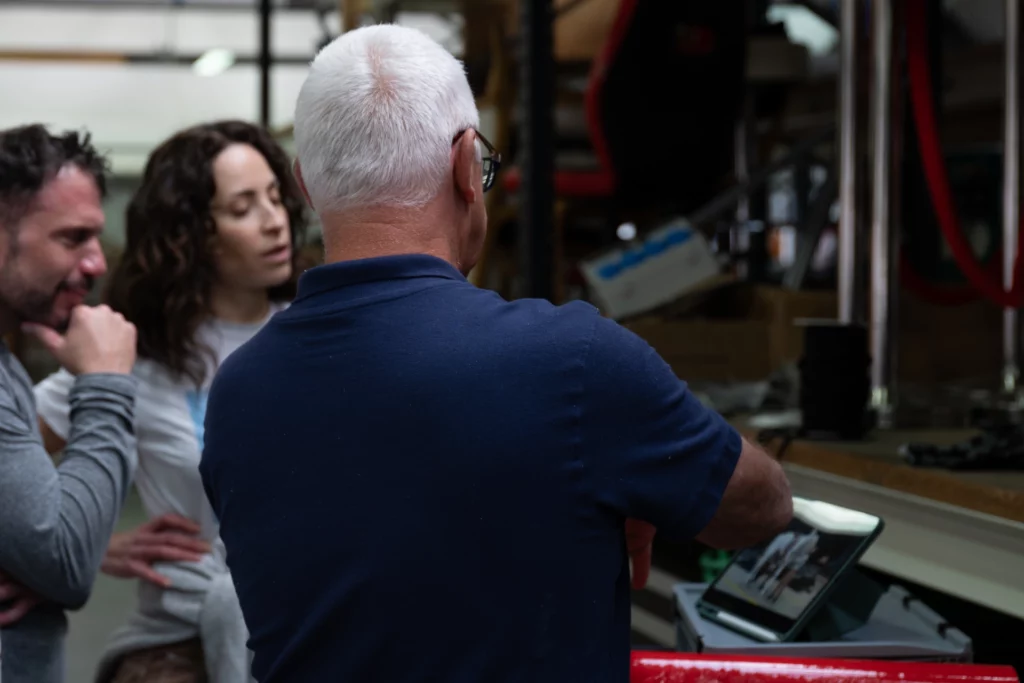
What I often do is film them. Then I show them on the I-pad what it looks like so they can correct themselves. It's a process of trying to teach people something that just feels completely unnatural. And then you try to refine it and refine it and refine it. So that you start to believe: this horse is a character all of its own.
And the puppeteers?
You forget them. At the beginning of a training session, you see a puppet being carried by people. But in the end it's a horse, it gets its own life, which is wonderful. When you reach that stage, when the animal goes the way it should go, then you can build on it and do wonderful things with it. And this horse here allows us to do much more than the usual creatures I create.
Because the main character is riding it?
That's the big challenge, you know. The rider weighs around 85 kilos. That means that each puppeteer carries the weight of a sack of cement on his shoulders. That alone is difficult to lift for 20 minutes. But at the same time, they have to perform and move. That is difficult. But maybe there is a way to simplify it all.
Which ones?
We could attach the rider with a winch or cables so that the weight is reduced somewhat. It's also about the safety of the actor. After all, these horses are quite big. If someone wants to get into the saddle, but the stirrup is at a height of one and a half meters - that's a big step, you need momentum. The two people on the horse could be pulled off their feet. So there are still many special tasks that we have to face.
You need two puppeteers for this?
Two inside and one at the head. They have to work well together. It's great for team building because the players have to get to know each other really well and anticipate what the other person is going to do. And it's nice to see how this game welds a team together. The better they understand each other, the more convincingly the horse performs in the end.
Will you be coming back to Fulda in the summer to see the musical?
I didn't intend to at first. But now that I'm witnessing the work process here, I've become very curious and am really thinking about coming back and watching it. Maybe I'll get a video. But of course it would be much nicer to sit in the theater and experience the whole show live on site.